My own intention for this guided thirty days is in the spirit of an Ignation examen, in which we are invited to find God in all things.
To look deeply into my ordinary life in order to, perhaps, meet the Divine.
I hope it will be a good addition to the Daily Stoics for November along with the day's usual readings.
|
|||||||||||||||

Spend five minutes sitting quietly.
No phone, music or a particular task.
Notice what happens.
“Query: What becomes noticeable when I stop filling the silence?”

In one conversation today, give the other person your full attention.
Resist the urge to interrupt or formulate your response.
“Query: What changes when I listen to understand?”

Go for a short walk without headphones or other distractions.
Pay attention to the sounds around you.
“Query: What do I usually overlook?”

When something irritates or provokes you, pause before responding.
Observe your immediate reaction.
“Query: Where does my first response come from?”

Choose a question or decision that's been on your mind.
Spend ten minutes considering it quietly, without forcing an answer.'
“Query: Can I allow uncertainty without immediately trying to resolve it?”

Avoid unnecessary purchases today.
Notice what you're tempted to buy and why.
“Query: How do I distinguish between what I need and what I want?”

Choose one small area of your home or digital life and remove something you no longer need.
Donate, reuse or recycle where possible.
“Query: What am I holding on to, and why?”

Enjoy one meal without screens, reading or multitasking.
Notice the food and the work that brought it to your table.
“Query: How often do I appreciate what sustains me?”

Look at your schedule.
Identify one obligation you could simplify, change or let go of without neglecting your responsibilities.
“Query: Where have I confused being busy with being useful?”

Reflect on an area of life where you continually want more.
Write down what enough might look like.
“Query: What would change if I recognized that I already have enough?”

In a meeting, conversation or online discussion, pay attention to who speaks,
who gets interrupted and whose views receive attention.
“Query: Whose voices might I be overlooking?”

Think about someone you've judged based on their role,
background, beliefs or appearance.
Consider what you might not know about them.
“Query: How do my assumptions affect the way I treat others?”
Do something useful for someone without expecting anything in return.
Keep it simple and respectful of what they actually need.
“Query: What does care look like in practice?”
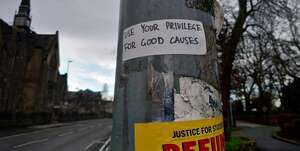
Identify one advantage or opportunity in your life that others may not share.
Consider how it affects your choices and opportunities.
“Query: How can awareness of my advantages influence my actions?”

Reach out to someone in your community whom you haven't spoken with recently.
Listen to how they are doing.
“Query: What responsibilities come with belonging to a community?”

In a disagreement today, focus on understanding the other person's position
instead of proving yours.
“Query: What happens when I stop treating disagreements as a competition?”

When you encounter something upsetting, pause before reacting.
Choose a response that respects both your values and the people involved.
“Query: Can I be firm without being hostile?”

Spend fifteen minutes reading about a historical or contemporary
nonviolent movement.
Consider the methods it used and the challenges it faced.
“Query: What makes nonviolent resistance effective?”

Think of an issue where you strongly disagree with someone.
Try to Identify the underlying concern or value
that might motivate their position.
“Query: Can I recognise another person's concerns without abandoning my convictions?”
Indentify a conflict, large or small,
where you could make a constructive contribution.
Choose one realistic and safe action.
“Query: What is within my power to change?”

Pay attention to how you describe events and experiences today.
Notice any temptation to embellish, omit or distort.
“Query: When is it hardest for me to speak plainly and truthfully?”

When you encounter something you're uncertain about, acknowledge it.
Be curious rather than pretending to have an answer.
“Query: What makes uncertainty uncomfortable?”

Choose a belief or opinion you hold strongly.
Seek out a credible perspective that challenges it
and consider what you can learn.
“Query: Am I willing to change my mind when I encounter new understanding?”

Before making a decision today, consider how it aligns with your values and
how it might affect others.
Give yourself time to reflect where possible.
“Query: What helps me recognise the right course of action?”

During a conversation or meeting, allow a moment of silence before contributing.
Consider whether what you want to say
will help move the conversation forward.
“Query: How do I recognise when to speak and when to listen?”

Think of someone you find difficult.
Consider their humanity, their experiences
and the possibility of good in them.
“Query: What changes when I try to see that of God, or the possibility of goodness, in everyone?”

Spend time outdoors, or observe nature from where you are.
Pay attention to the living world and your relationship with it.
“Query: What responsibilities arise from being part of the natural world?”

Consider a decision involving other people.
instead of focusing solely on your preferred outcome,
explore what might allow everyone to move forward together.
“Query: How can we make decisions that respect different experiences and concerns?”

If possible, attend a Quaker meeting for worship,
in person or online. Alternatively, set aside twenty minutes
for quiet reflection inspired by the practice of expectant waiting.
“Query: What is different about sharing silence with others?”

Look back over the past month.
Choose one practice that you'd like to continue
and consider how to make room for it in your life.'
“Query: What have these thirty days revealed about how I want to live?”